Last updated October 2026 · 4 min read
TL;DR
- On October 8, Clue launched Get Care, a free service in the Clue app that connects users with vetted healthcare providers in the US, UK and Germany [1].
- Embla is the Get Care provider for weight and metabolic health.
- Clue users in the US can choose coaching only ($80/month) or coaching with clinical support and GLP-1 medication when appropriate ($135/month).
- There is a coaching-only path for anyone who prefers no medication, cannot take it, or is pregnant or planning a pregnancy.
What Clue launched
Clue is one of the most widely used cycle-tracking apps in the world. According to Clue, more than 100 million people in 190 countries have used it [1].
Get Care is Clue's step from tracking to care. Instead of leaving users to turn their own data into a doctor's appointment, the app now points them to specialist providers for contraception, fertility and conception, hormone and fertility testing, mental health, and weight and metabolic health. Perimenopause and menopause care is set to follow in November.
The reasoning comes from Clue's own users. In a survey of nearly 12,000 people, about two thirds reported concerns about their menstrual health, and most were managing those symptoms on their own. Nearly one in four new users said a key reason for joining was to gather information to bring to a healthcare professional [1].
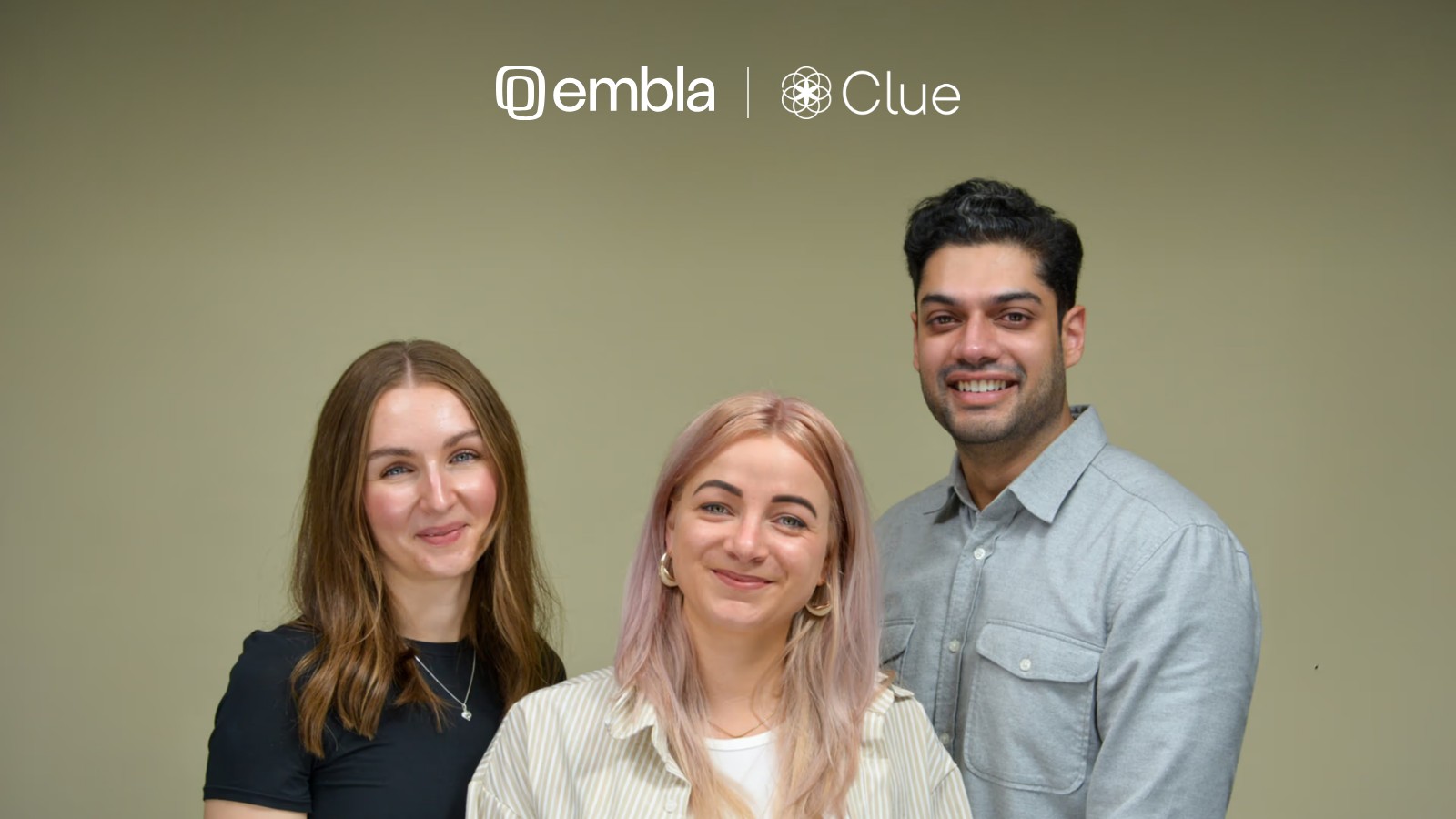
Clue CEO Rhiannon White put it plainly in the launch coverage: women "should not have to do all the work" of connecting what they know about their bodies to the care available to them.
Clue says every Get Care provider is vetted on scientific evidence, regulatory clearance where required, and accessibility.
Clue is also working separately with Novo Nordisk to improve access to information and professional advice on women's metabolic health, including during perimenopause. That collaboration is independent of Embla's role in Get Care.
Why we did this
Embla exists to end reductive approaches to weight loss.
Weight is shaped by biology, hormones, sleep, stress, habits, relationships and life stage. For people with cycles, several of those move. Hormonal shifts across the month, around pregnancy and through perimenopause can all affect weight and metabolic health.
Most weight loss offers ignore that. One plan. One medication. One dose ladder, climbing until it works or until you stop.
Clue users already pay close attention to their bodies. They are the last people who should be handed a one-size-fits-all plan. Get Care lets us meet them in the app they already use to make sense of their health, with care that starts from their reality instead of a template.
"People who track their cycles know better than anyone that the body isn't a fixed formula. Weight care should start from the same place. Being part of Get Care puts that kind of care inside an app millions of people already trust." Nicholas Syhler, co-founder and co-CEO, Embla
Why the fit makes sense
Behavior first, medication second
Every Embla member works 1:1 with a health coach on nutrition, movement, sleep, stress and habits. GLP-1 medication is an option, not the starting assumption.
Lower doses, with a plan to taper
When medication is appropriate, it is prescribed by independent licensed clinicians at the lowest effective dose, with a structured plan to taper when clinically appropriate.
A real path for people planning a pregnancy
GLP-1 medications are not recommended during pregnancy or while actively trying to conceive. For many Clue users, that is not a footnote. Embla's coaching-only program gives them structured support without medication.
The evidence behind the approach
Embla's model is backed by our own published research. The TRIM study followed 2,694 Embla members in a real-world setting [2]:
- 16.7% average weight loss over 64 weeks
- An average dose of about 1.08 mg of semaglutide per week, less than half the standard maximum dose
- 55% less GLP-1 medication
- 78.5% of members tapered or stopped GLP-1s
TRIM is an observational study of Embla members, not a randomized trial. Individual results vary, and no outcome is guaranteed.
Who it is for
Clue users in the US who are 18 or older.
- Coaching only: no BMI requirement and no medication.
- Coaching with clinical support: medication eligibility is decided by an independent licensed clinician. It typically means a BMI of 30 or higher, or 27 or higher with a weight-related condition.
The coaching-only program is likely the better fit if you prefer not to use medication, cannot take it, or are pregnant or planning a pregnancy.
What the partnership includes
Get Care is free in the Clue app. Through it, Clue users can join Embla on one of two plans:
- Thrive, $80/month: 1:1 coaching for nutrition, movement, sleep, stress and habits, without medication.
- ThriveMD, $135/month: coaching, clinical oversight by independent licensed clinicians, and GLP-1 medication support when appropriate.
The cost of any prescribed medication is separate from your Embla plan and depends on your insurance coverage or pharmacy pricing.
Embla does not receive your Clue data. Health information you share with Embla is handled under HIPAA.
How to get started
- Take the assessment. A short online health screening about your health, goals and whether you are interested in coaching, medication or both.
- Meet your coach. Talk through your history and what kind of support will actually help.
- Clinical review, if relevant. If medication may be right for you, an independent licensed clinician reviews your medical history.
- Start your plan. Work with your coach and track progress in the Embla app.
Read more about the launch
- FutureFemHealth: Clue launches Get Care to connect period tracking with women's healthcare services
- Clue on LinkedIn: Get Care announcement
- The TRIM study: Embla's published real-world results
References
- O'Sullivan A. Clue launches Get Care to connect period tracking with women's healthcare services. FutureFemHealth, October 9, 2026. Link
- Seier S, Stamp-Larsen K, Jensen SBK, Torekov SS, Gudbergsen H. Treat to target in weight management with semaglutide: real-world evidence from an eHealth clinic (the TRIM study, Embla's own published research). Diabetes, Obesity and Metabolism, 2025. DOI 10.1111/dom.70096. Link

Latest Articles

Related Articles



Ready to take control of GLP-1 spend?
Let’s talk about how Embla can reduce costs and improve health outcomes across your employee population.